Aebersold and Svensk Master a Brutal Long Distance as Czech Fans Roar Rauturier onto the Podium
World Cup Round 3 – Long, 6 August 2026
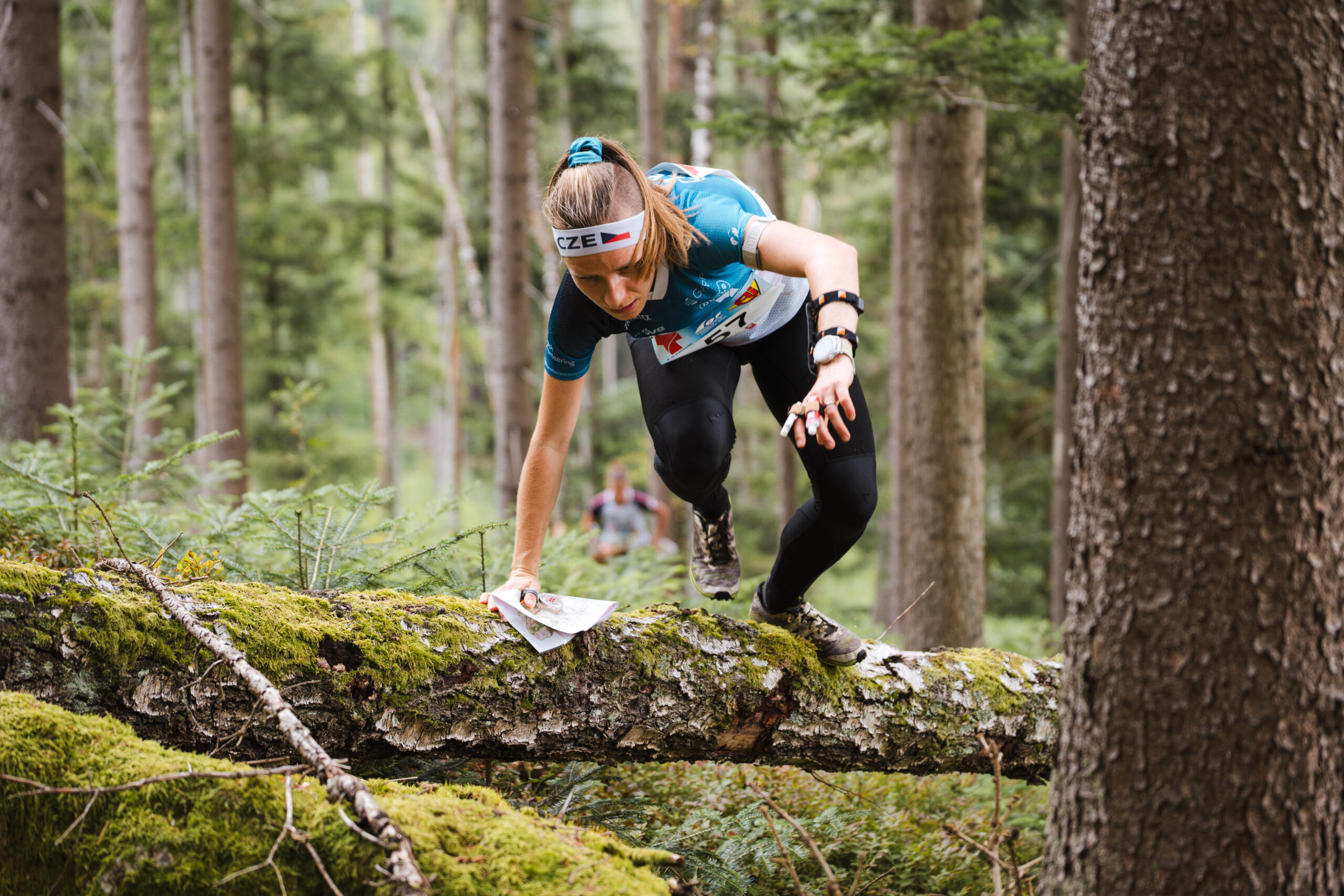
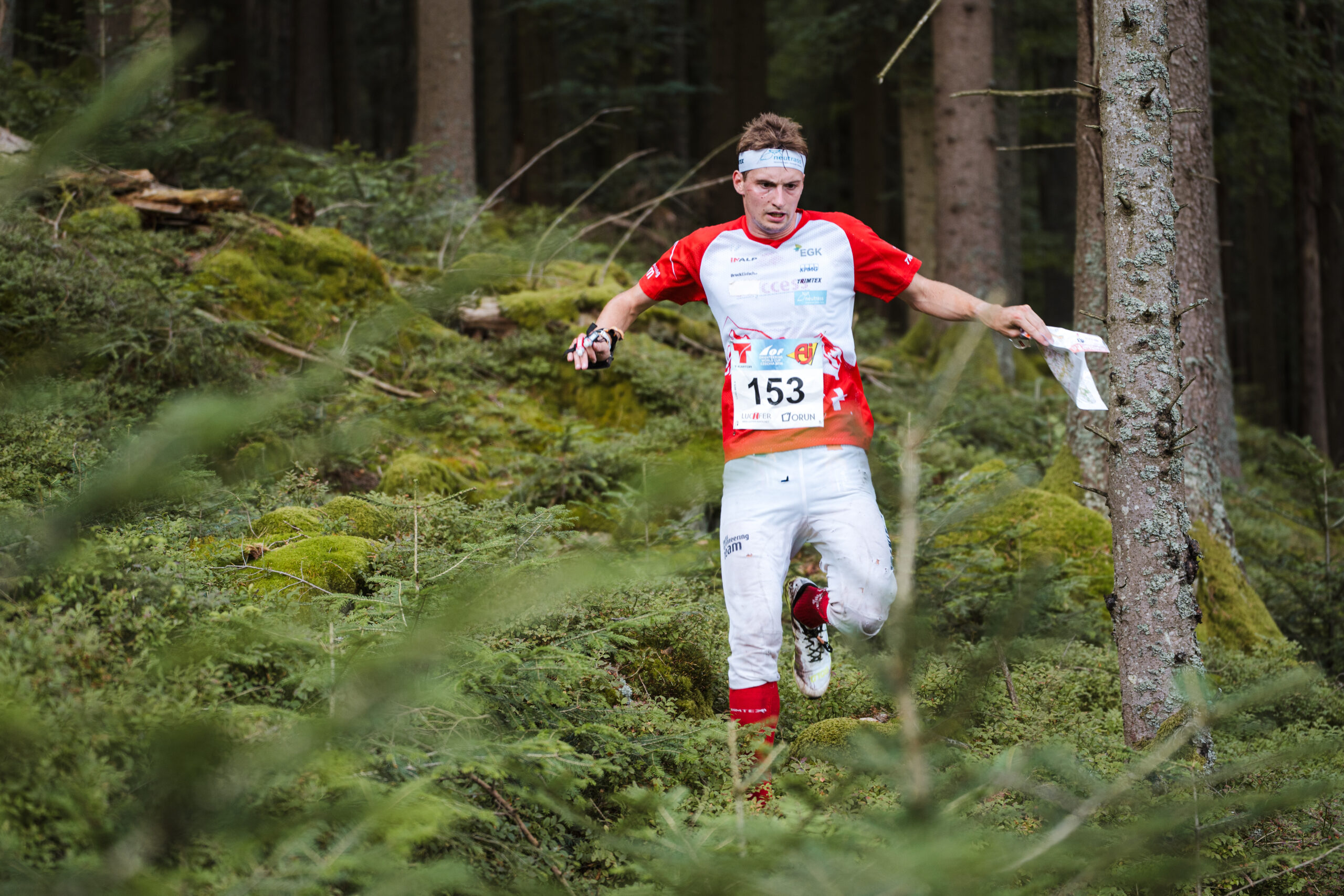
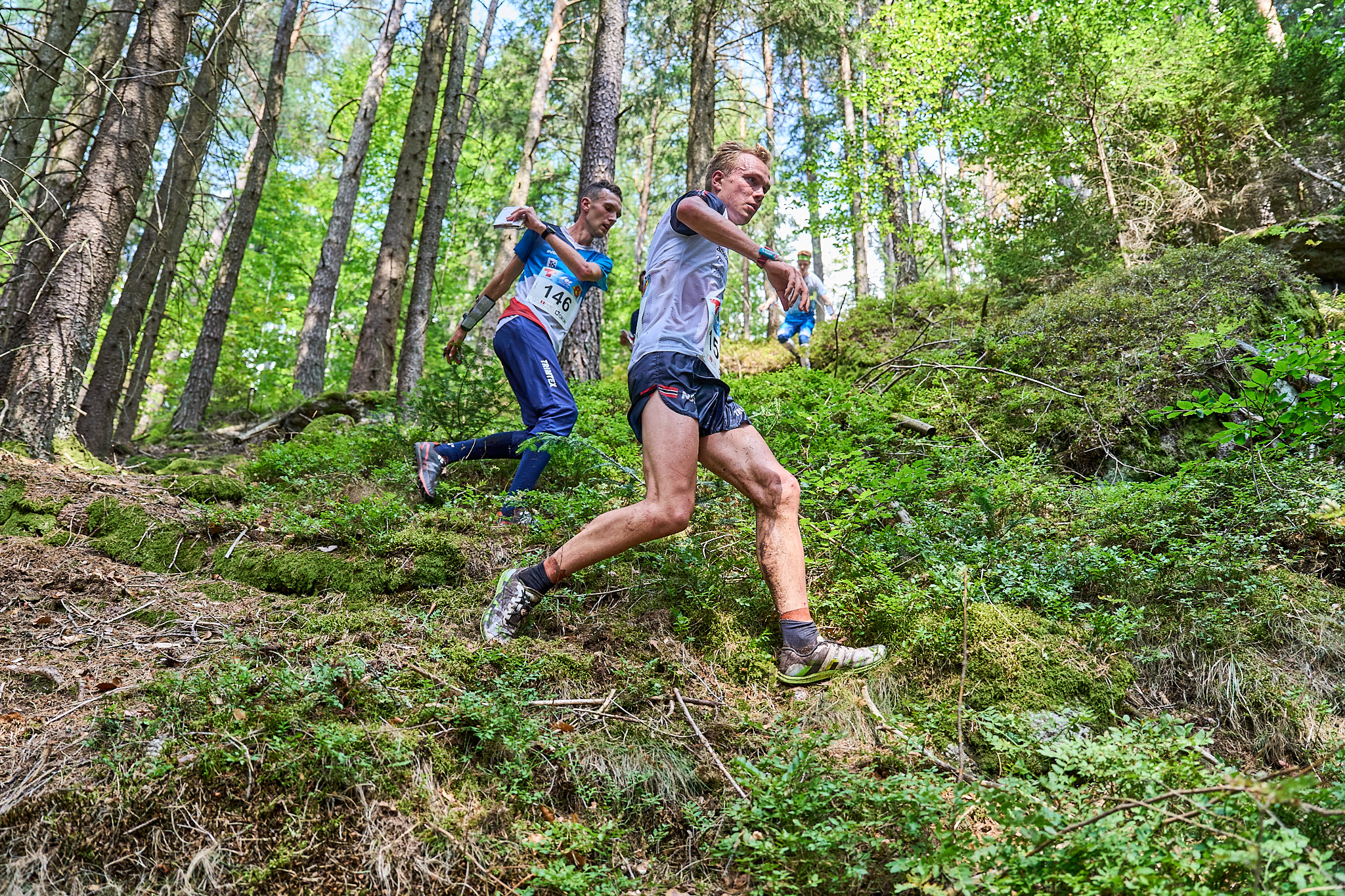
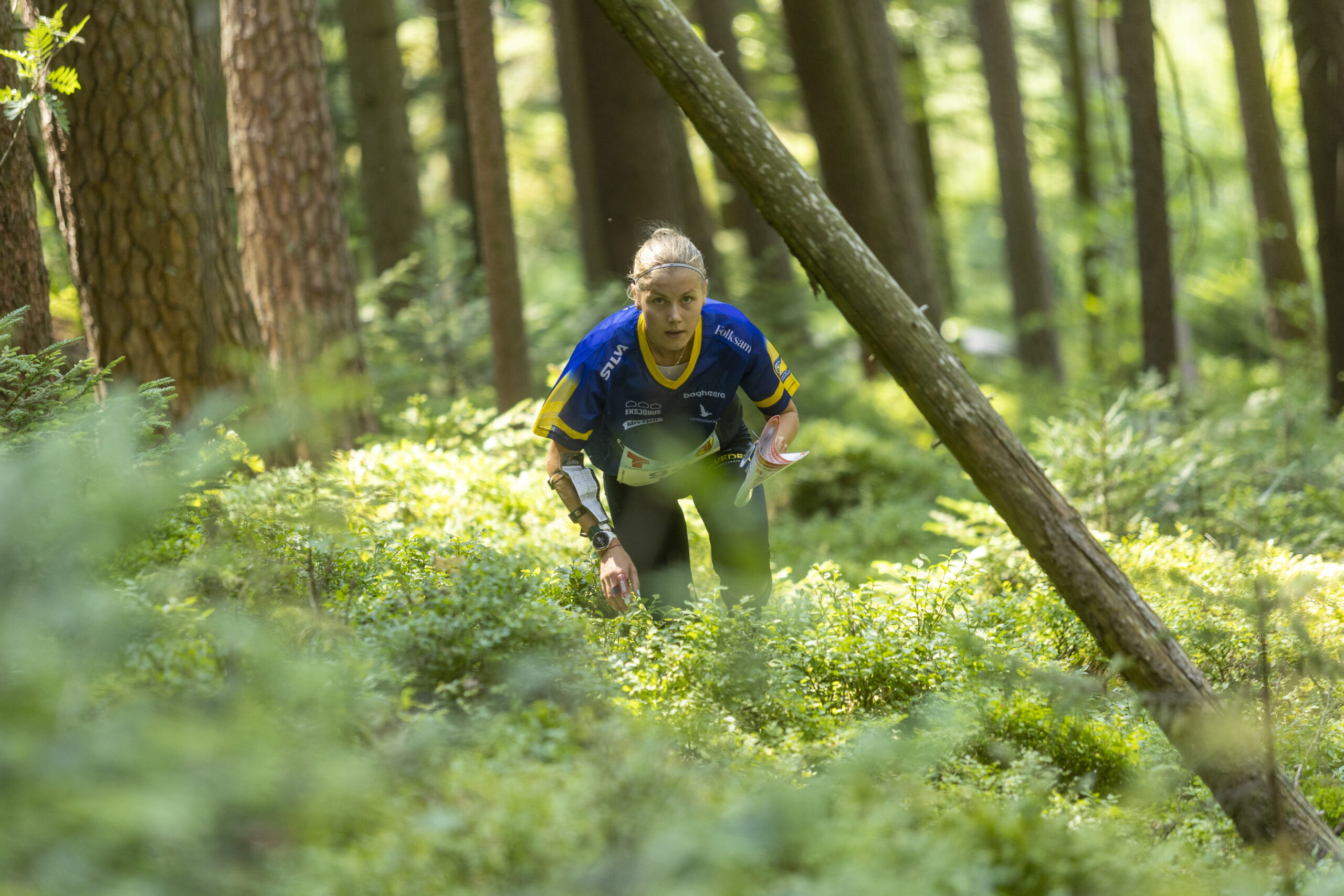
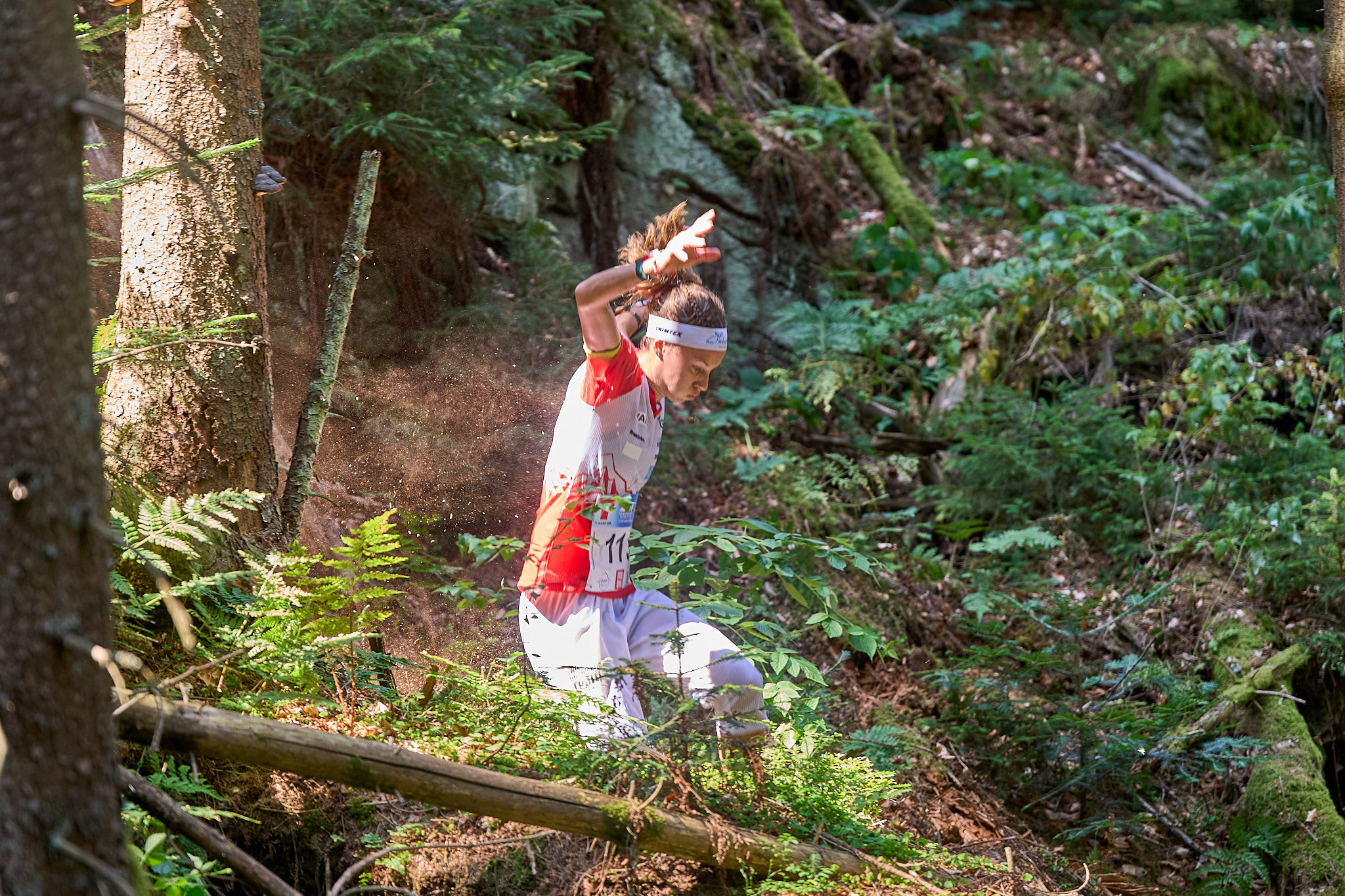
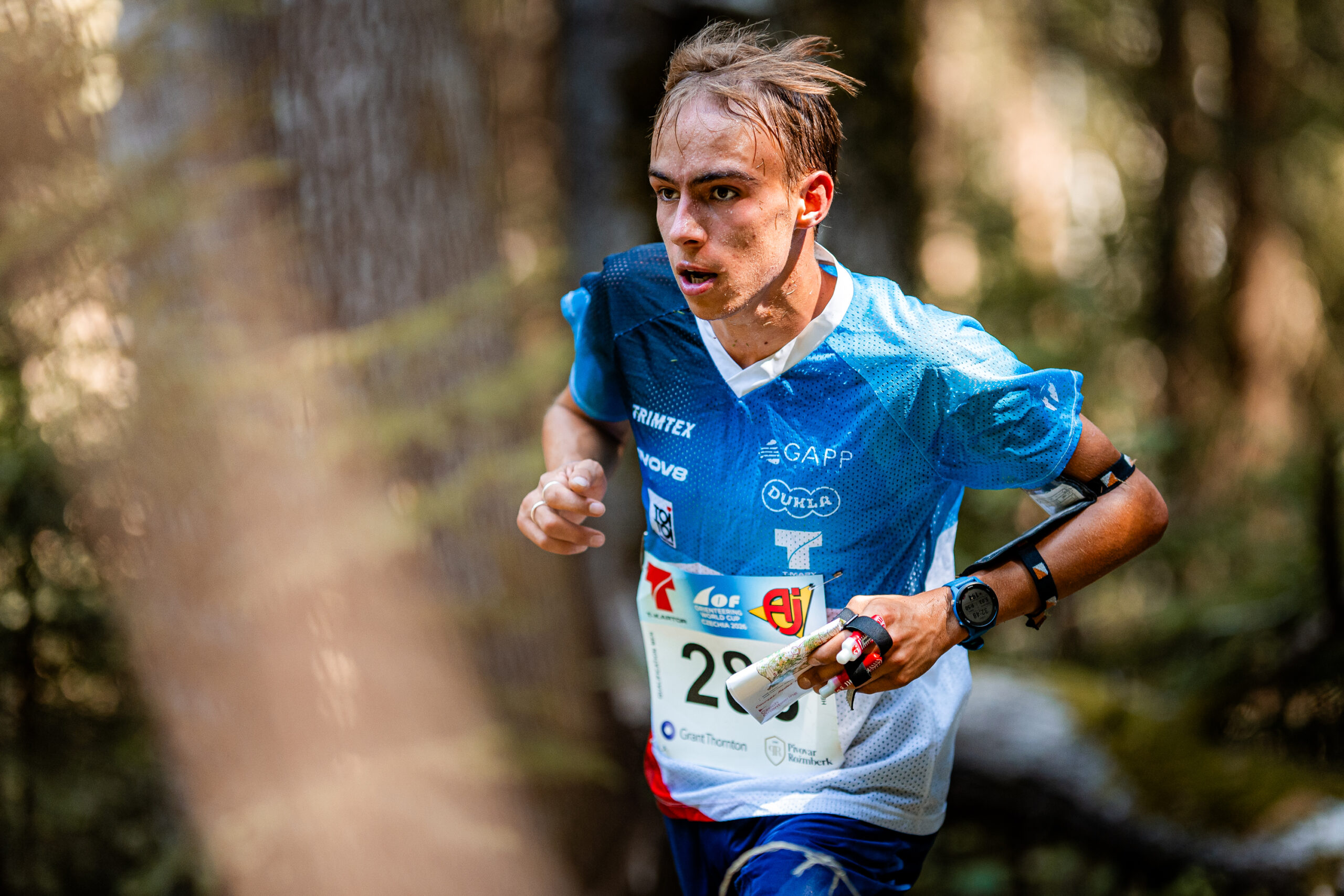
The long distance day of World Cup Round 3 delivered everything the home crowd could have hoped for – except the thunderstorms. Forecasters had warned of afternoon storms rolling over the terrain, but the skies held, leaving runners to battle only the heat, which climbed well past comfortable by the time the leading starters hit the forest. On a punishing course – 15.2 km with 735 m of climb for the men, 13 km and 595 m for the women – it was a day for patience, physical strength and cool heads.
And the crowds came. Spectator corridors and the arena were packed all afternoon, with the loudest cheers reserved for the runners in Czech colours.
Women: Aebersold untouchable, Rauturier delights the home fans
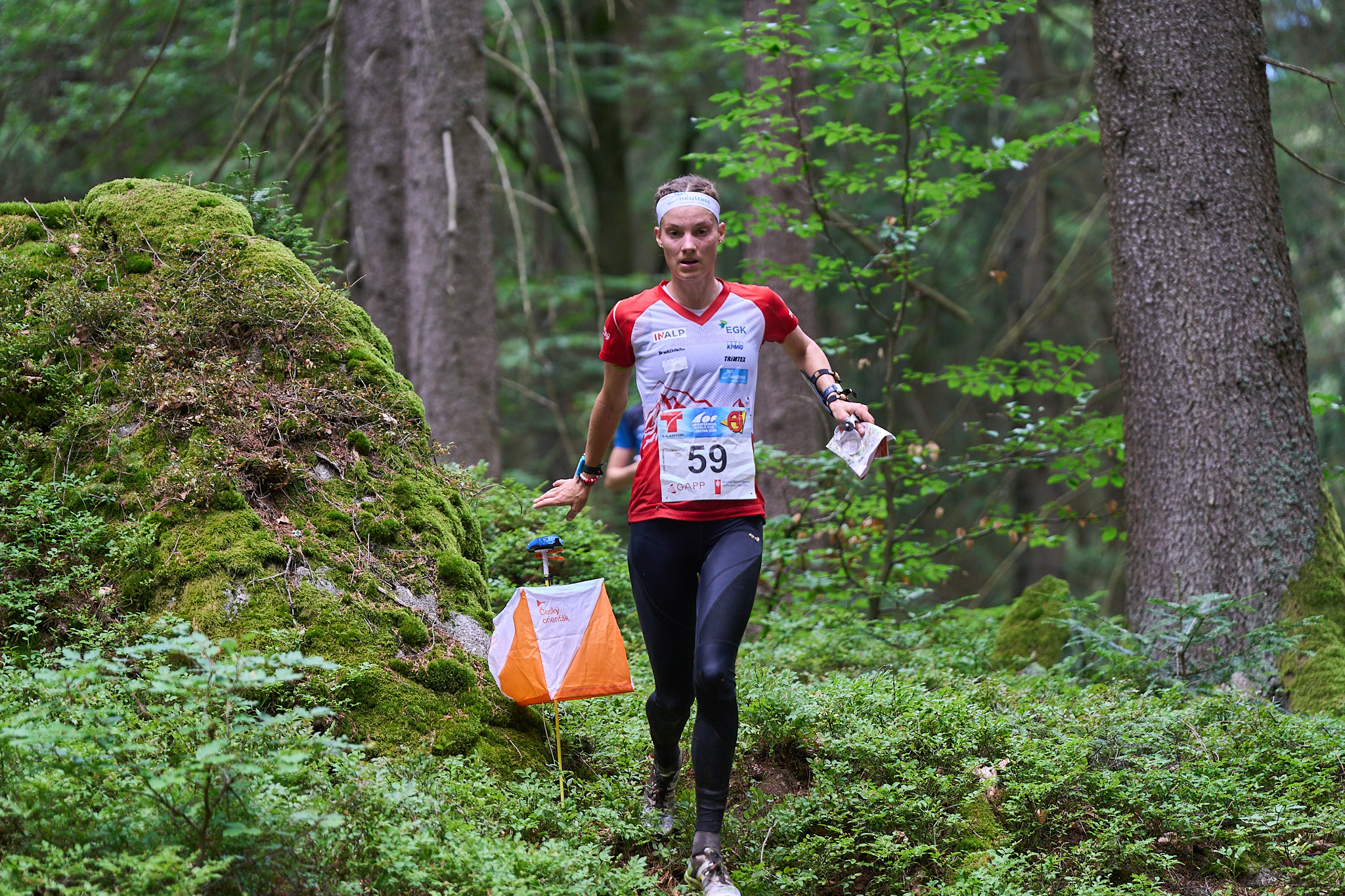
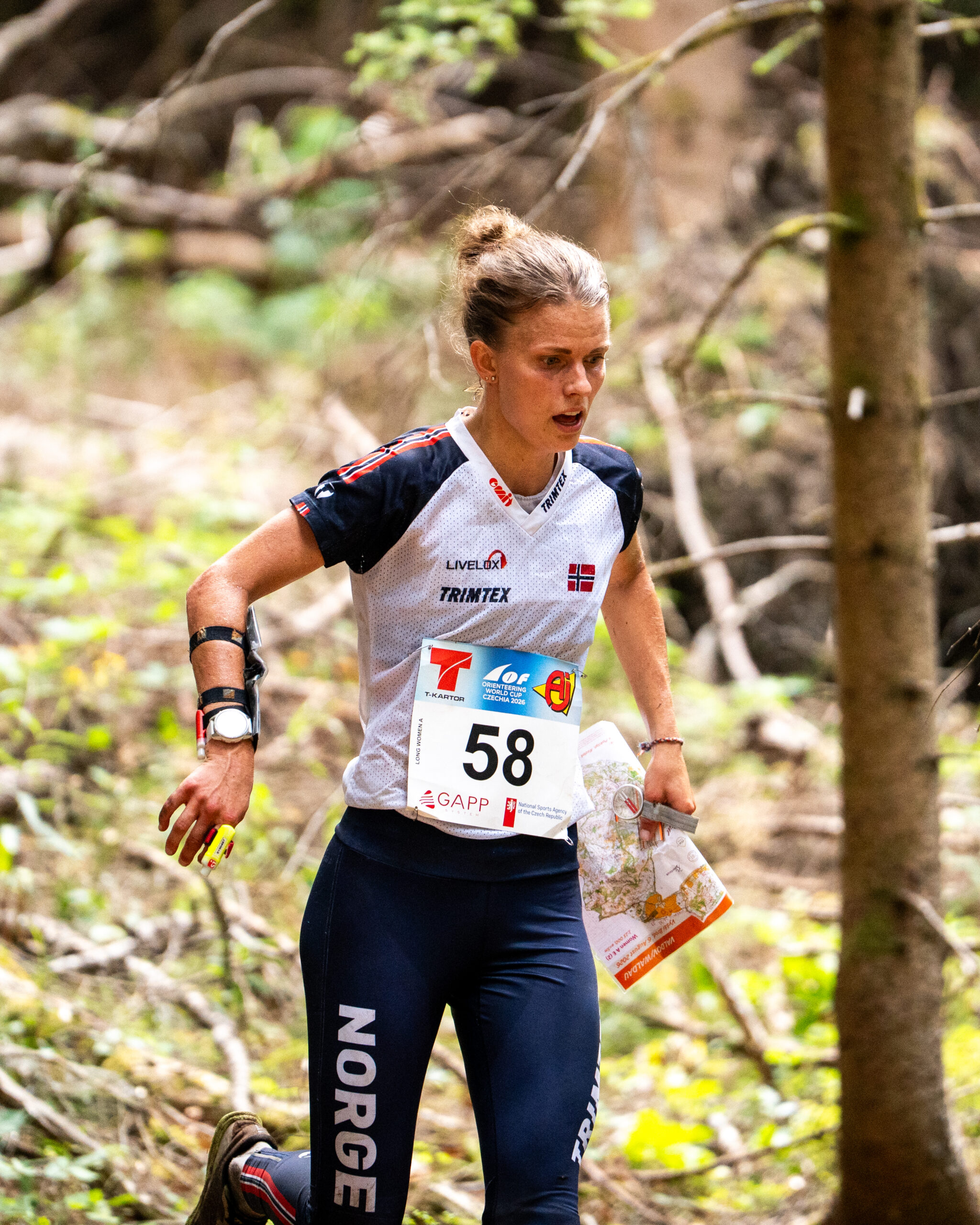
Simona Aebersold (Switzerland) produced a masterclass. The Swiss star led at the very first radio control and never surrendered the lead, winning in 1:36:38 ahead of Norway’s Marie Olaussen (+2:23).
The story of the day for the home crowd, though, was Tereza Rauturier. The Czech ran a beautifully controlled race, sitting in the top group throughout and holding off Norway’s Pia Young Vik to claim third, 4:21 behind the winner. The noise as she crossed the line into the arena said everything about what a home World Cup podium means.
She was far from alone. Lucie Dittrichova backed up the podium with a strong fifth place (+9:40), Denisa Kralova finished 11th and Marketa Mulickova 13th — four Czech women in the top thirteen on a day when the demanding course punished every hesitation. Lucie Semikova (17th) rounded out an excellent team performance.
Men: Svensk defies the heat
In the men’s race, Sweden’s Viktor Svensk was in a class of his own. Leading from the opening splits, he stretched his advantage through the middle section of the course and won in 1:35:19. Kasper Harlem Fosser (Norway) chased hard but had to settle for second at 1:47, with Fabian Aebersold (Switzerland) completing the podium a further eleven seconds back. Veteran Daniel Hubmann showed his enduring class in fifth.
The best Czech was Tomáš Křivda, who shared sixth place with Emil Svensk at 4:19 — an outstanding run that had the arena on its feet, and at times within striking distance of the podium fight. Jakub Chaloupsky continued the strong home showing in 11th, with Daniel Vandas 17th.
A course that took no prisoners
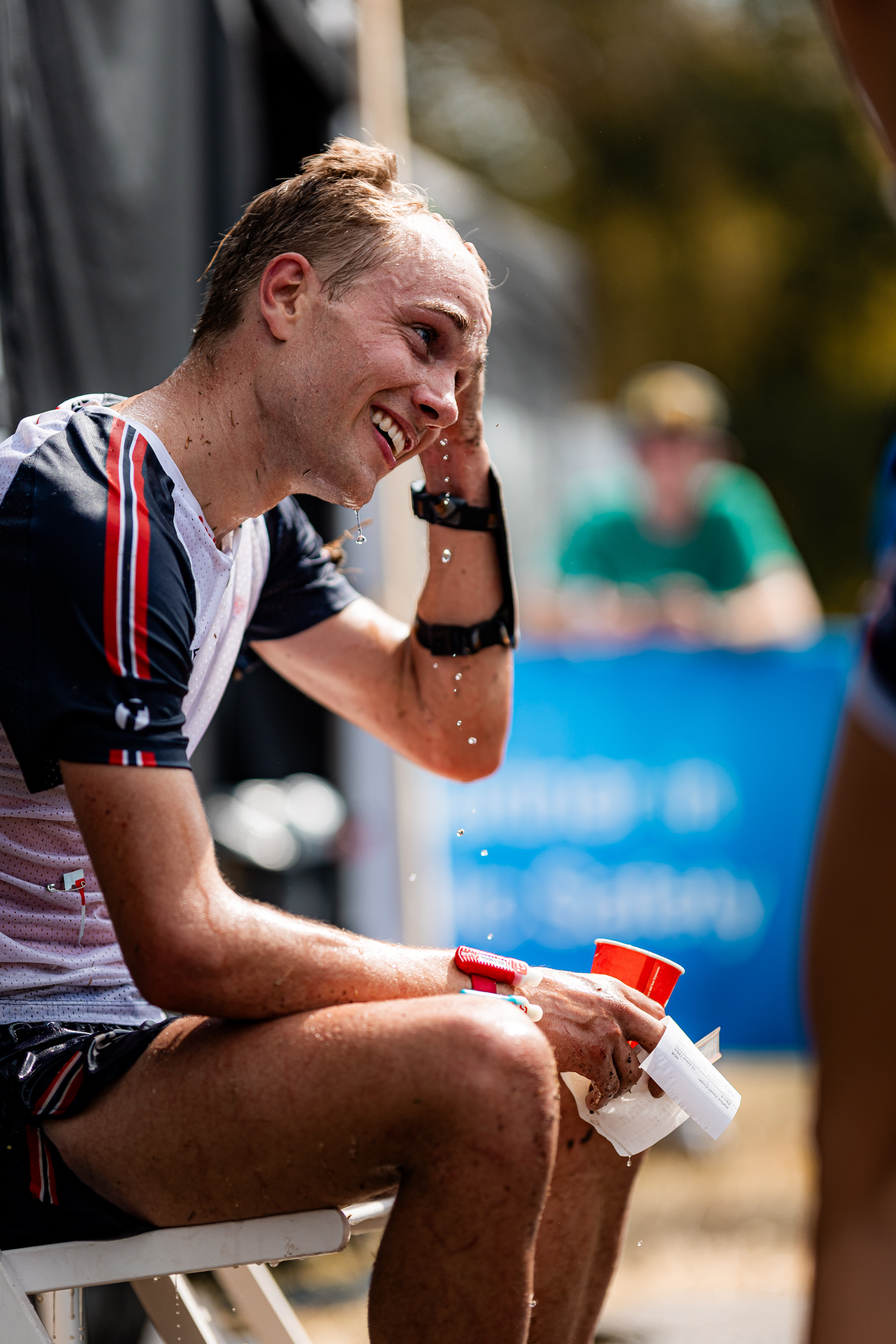
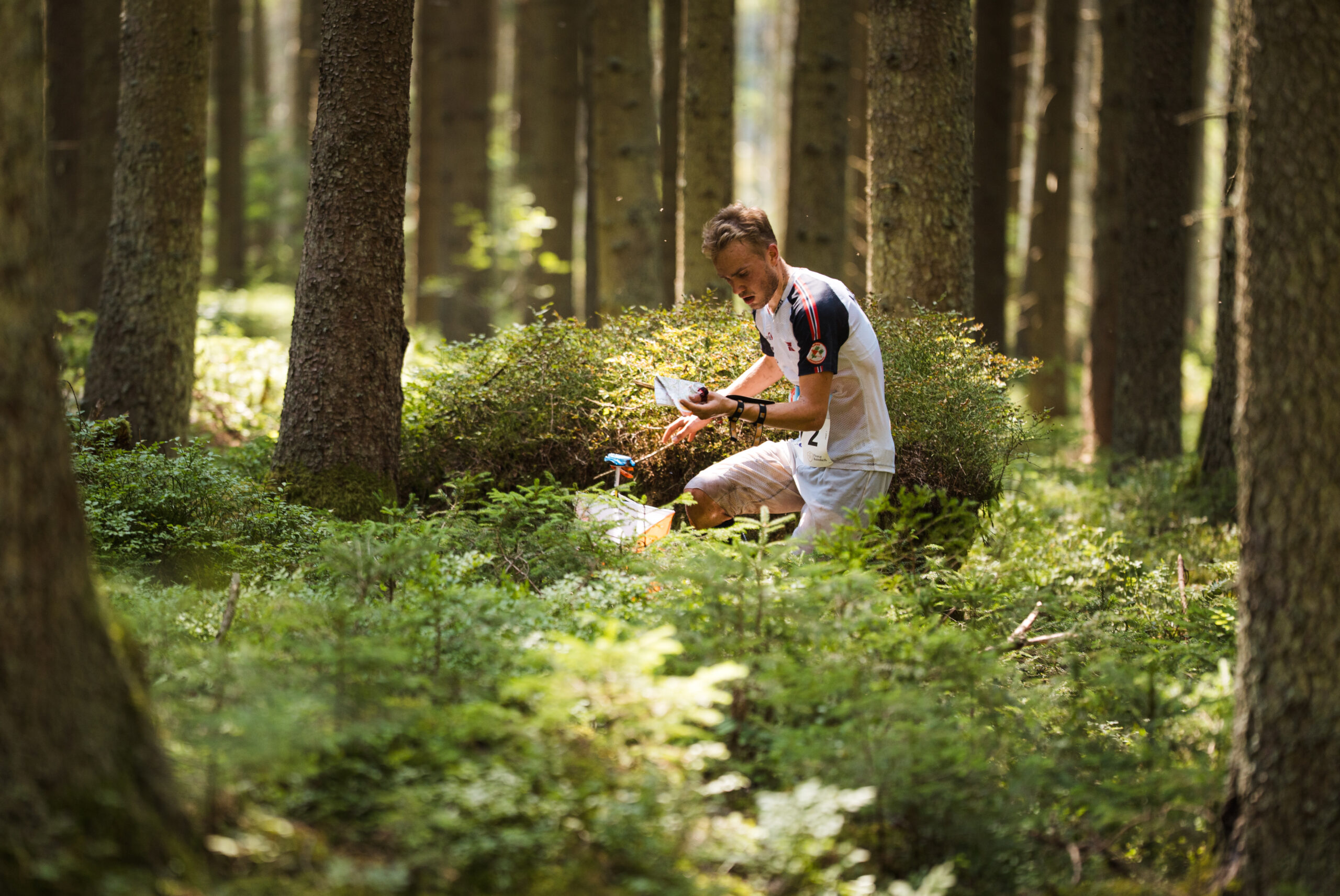
Course setters promised a true long distance test, and they delivered: route-choice legs, relentless climb and technically demanding sections that shuffled the order at nearly every radio point. Combined with the high temperatures, the attrition was real – several runners faded badly in the closing kilometres, and the finish chute saw more than a few athletes collapse into the shade the moment they crossed the line.
The threatened storms never arrived, but nobody in the arena was complaining. A dry, loud, sun-soaked day of world-class orienteering – and two Czech names, Rauturier and Krivda, written large on it.
Perfect Day for Czech Women as World Cup Opens in Vyšší Brod
The Orienteering World Cup returned to the forest on Wednesday, and the opening qualification race in Vyšší Brod could hardly have gone better for the home nation: all eight Czech women booked their place in tomorrow’s Long Distance A-final, joined by six of the eight Czech men.
The biggest home celebration came in Women’s Heat 1, where Lucie Dittrichová took the win in 54:08 with Denisa Králová just three seconds behind – a Czech one-two ahead of none other than Simona Aebersold, who followed a further eight seconds back in third. Tereza Rauturier, Jana Peterová and Barbora Smolková advanced safely from Heat 2, won by Sweden’s Alma Svennerud, while Lucie Semíková, Markéta Muličková and Viktorie Skáchová all made it through Heat 3, where Paula Gross of Switzerland set the fastest time of the day.
In the men’s competition, the usual stars showed they mean business. Fabian Aebersold (SUI), Eirik Langedal Breivik (NOR) and Topi Syrjäläinen (FIN) claimed the heat wins, with Daniel Hubmann, Kasper Harlem Fosser and the Swedish contingent all advancing comfortably. Tomáš Křivda led the Czech men with a strong third place in Heat 1, and Jáchym Coufal, Jan Strýček, Jakub Chaloupský, Martin Roudný and Daniel Vandas will join him in the A-final. There was heartbreak for Tomáš Kučera, who missed the cut in Heat 2 by an agonising two seconds, while Daniel Bolehovský also fell short.
Conditions were anything but easy. Athletes battled hot summer weather on physically demanding courses through the technically challenging South Bohemian terrain – stony slopes, detailed contours and sections of low visibility that punished every lapse in concentration, as a long list of mispunches across the heats confirmed.
There will be no time to recover: the Long Distance final takes place tomorrow, Thursday 6 August, with the qualifiers facing the longest and toughest test of the week. The forecast promises a dramatic backdrop, with thunderstorms expected over the Vltava valley – conditions that could turn an already demanding race into a true battle of endurance.
Thunderstorms precautions – changes (Long)
The local weather forecast for Thursday (Long) predicts heavy storms in the early morning, heavy storms in the evening and minor and uncertain storms and showers during the day.
In order to mitigate risks on the athletes health, the organizers after thorough discussions with IOF representatives and TV production decided to squeeze the programme followingly:
The first start is at 10:00, the quarantine deadline is at 11:00, the Women A final run between 10-12, Men A final between 12-14.
Today the teams took part in model events and we all enjoyed the opening ceremony. Tomorrow, the real show starts. Good news is the photo galleries are now open and active – thousands of photos to come. Bookmark the photo page and keep coming back.
Photo: Petr Kadeřávek
The National Sports Agency supports the 2026 Orienteering World Cup
The National Sports Agency has long supported the organisation of international sporting events that contribute not only to the development of elite sport but also to the promotion of the Czech Republic abroad. Events of this kind inspire children and young people to take up sport, strengthen local communities, and generate significant social and economic benefits.
Orienteering is a unique sport that combines physical fitness, mental resilience, strategic thinking, and respect for nature. These values make it an exceptional discipline and demonstrate the important role sport plays in the personal development of individuals as well as in society as a whole.
The Czech Republic has a long and proud tradition in orienteering. Czech athletes have consistently achieved strong results at international competitions, while Czech organisers have extensive experience in hosting major international events. The Orienteering World Cup is therefore not only a celebration of elite sport but also an opportunity to showcase the country’s organisational expertise, beautiful natural landscapes, and the attractiveness of orienteering to a wider audience.
The impact of major international sporting events extends far beyond the competition itself. They bring together athletes, coaches, officials, volunteers, and spectators from around the world, support regional tourism and local economies, and strengthen the Czech Republic’s reputation as a country capable of delivering world-class sporting events.
The National Sports Agency serves as the central government authority responsible for sport in the Czech Republic. It creates the conditions for the development of sport at every level—from children and youth participation through sports clubs, national federations, and community organisations to elite athletes representing the country on the international stage. Supporting major international sporting events is an integral part of this mission, helping to inspire future generations, encourage an active lifestyle, and present the Czech Republic to thousands of visitors from across the globe.
The National Sports Agency would like to thank the Czech Orienteering Federation, the Local Organising Committee, all partners, and the many volunteers whose commitment and dedication have made the 2026 Orienteering World Cup possible. Their efforts continue to strengthen the Czech Republic’s position as a respected host of world-class sporting events.
We wish all athletes the very best of success, the organisers a smooth and successful event, and all visitors an enjoyable stay in the Czech Republic and memorable experiences in South Bohemia.
For more information about the National Sports Agency, please visit https://nsa.gov.cz/
The World Cup Has Quietly Arrived
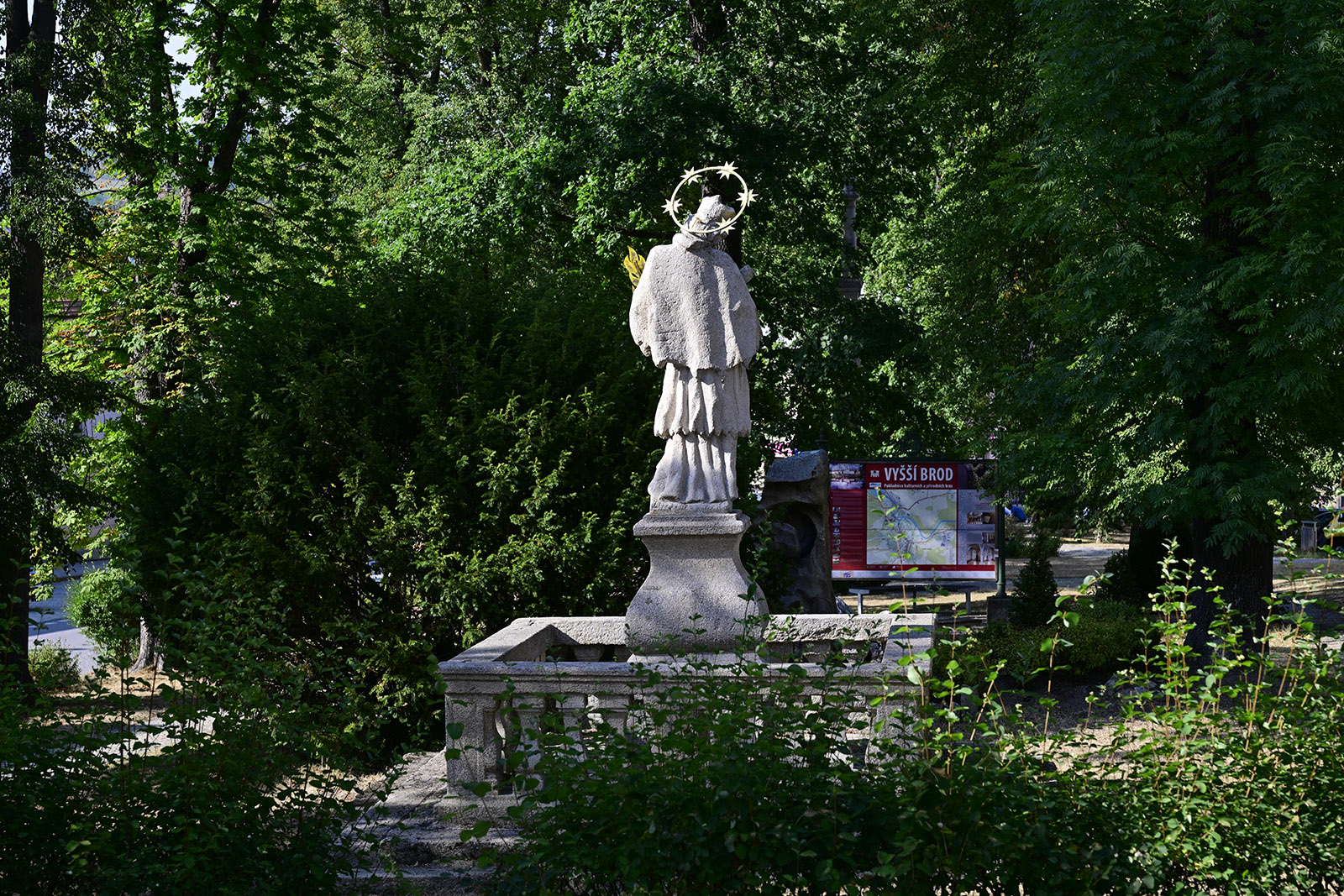
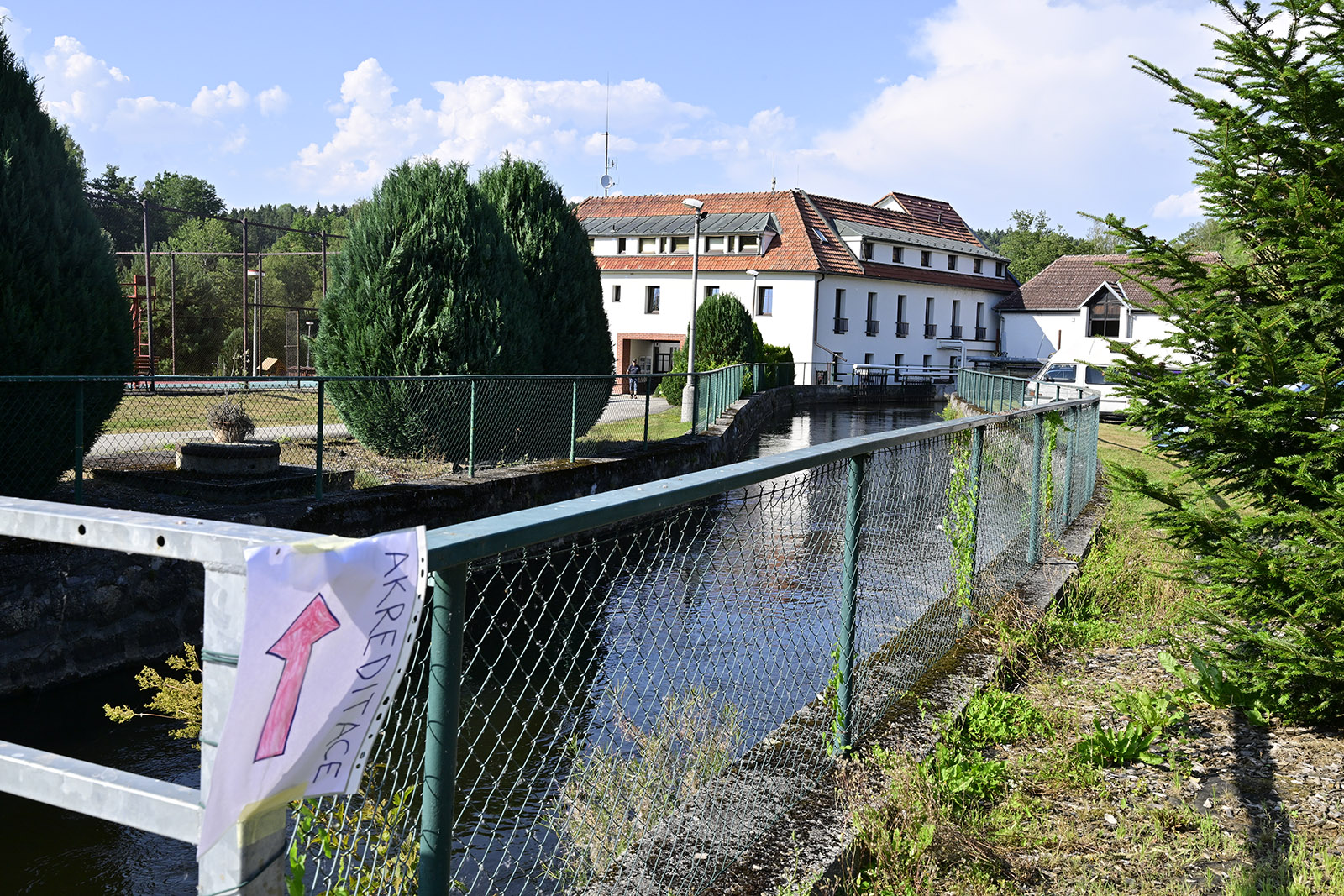
It began, as big things often do, with small steps. A minibus with foreign plates easing across the town square. A flag-carrying backpack leaning against the monastery wall. Somebody asking, in careful English, where the accreditation office might be.
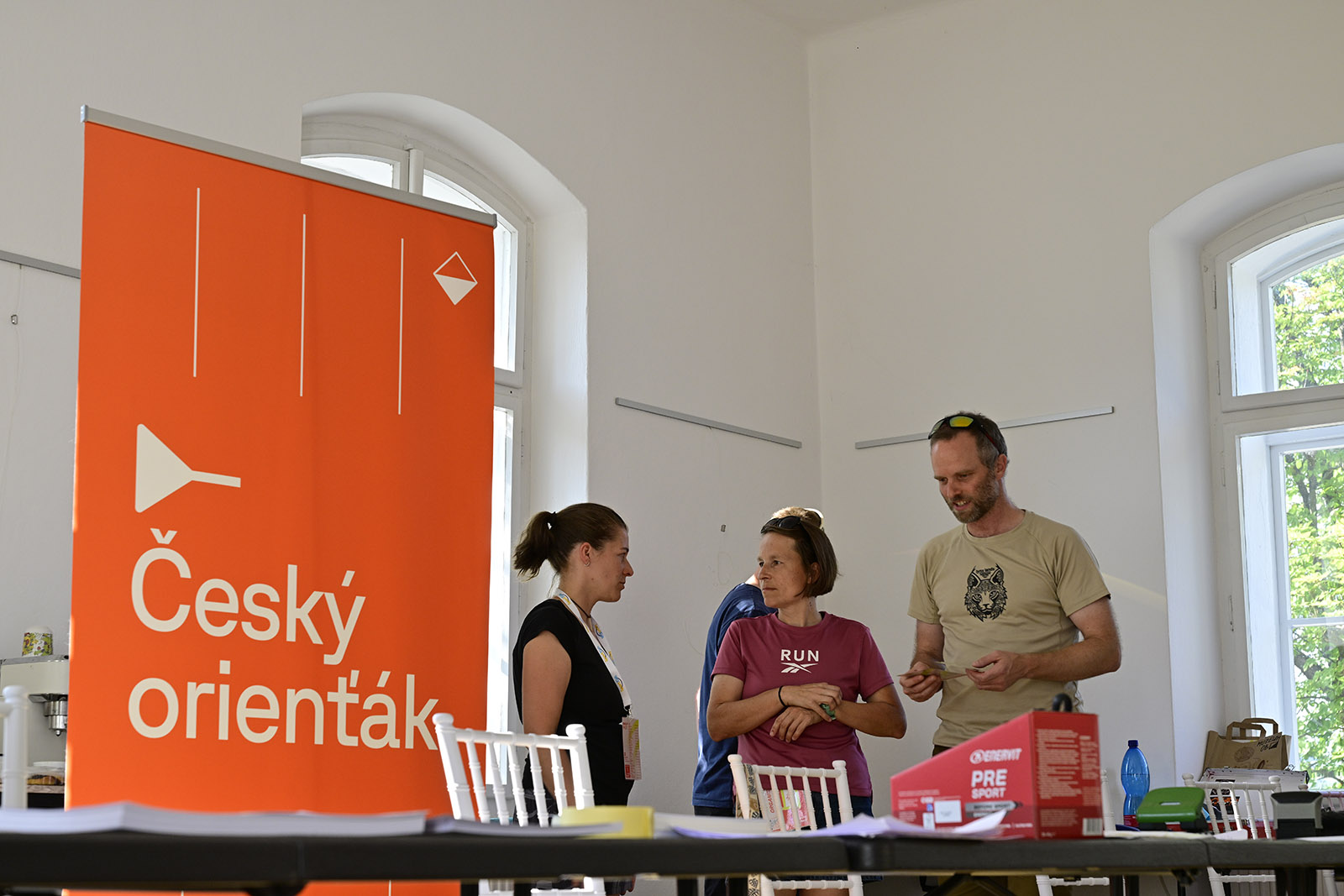
Today was the first official day of the Orienteering World Cup in Vyšší Brod, and it looked exactly the way a first day should. Teams strolled in from all corners of the orienteering world, collected their accreditation cards, and immediately set off again — this time into the forest, where the model event offered a first, polite handshake with the Czech terrain. The forest, we are told, shook hands firmly.
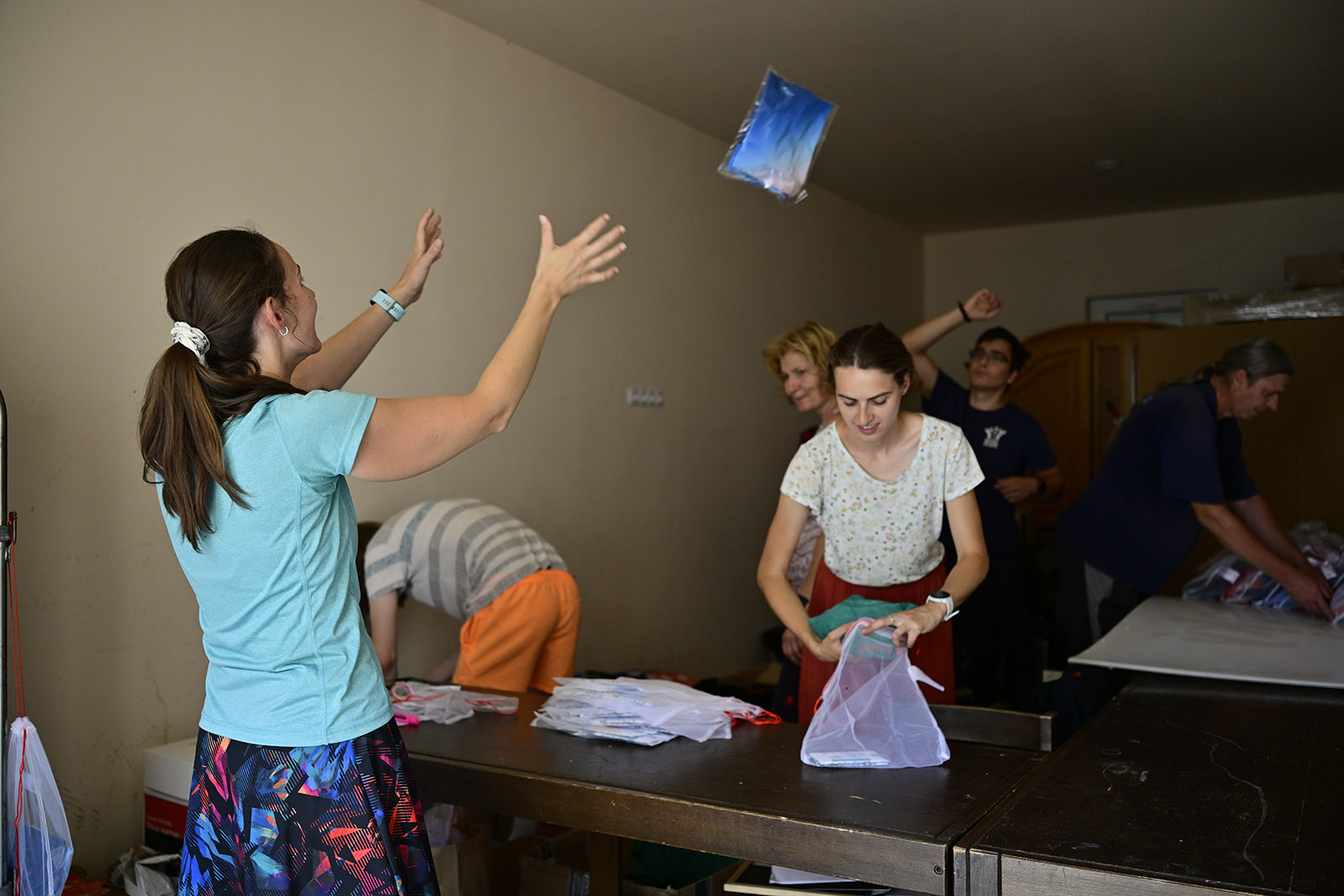
The organisers strolled in too, though “strolled” may be generous — they mostly hurried, carrying banners, cables and clipboards, turning a quiet corner of South Bohemia into a World Cup venue one box at a time.
And the locals noticed. Of course they noticed. There are suddenly more languages on the square than usual, more lean people in running tights studying maps over coffee, more curious glances exchanged in both directions. Vyšší Brod is sizing up its guests, and the guests are sizing up Vyšší Brod. So far, both sides seem pleased.
The atmosphere is building slowly but surely, like a runner settling into pace. Tomorrow brings the Opening Ceremony on the town square; the day after, the racing begins. Tonight, the town hums quietly, one accreditation card at a time.
The World Cup is here. It just hasn’t raised its voice yet.
How to wash your sports clothing so it lasts longer and keeps its performance benefits
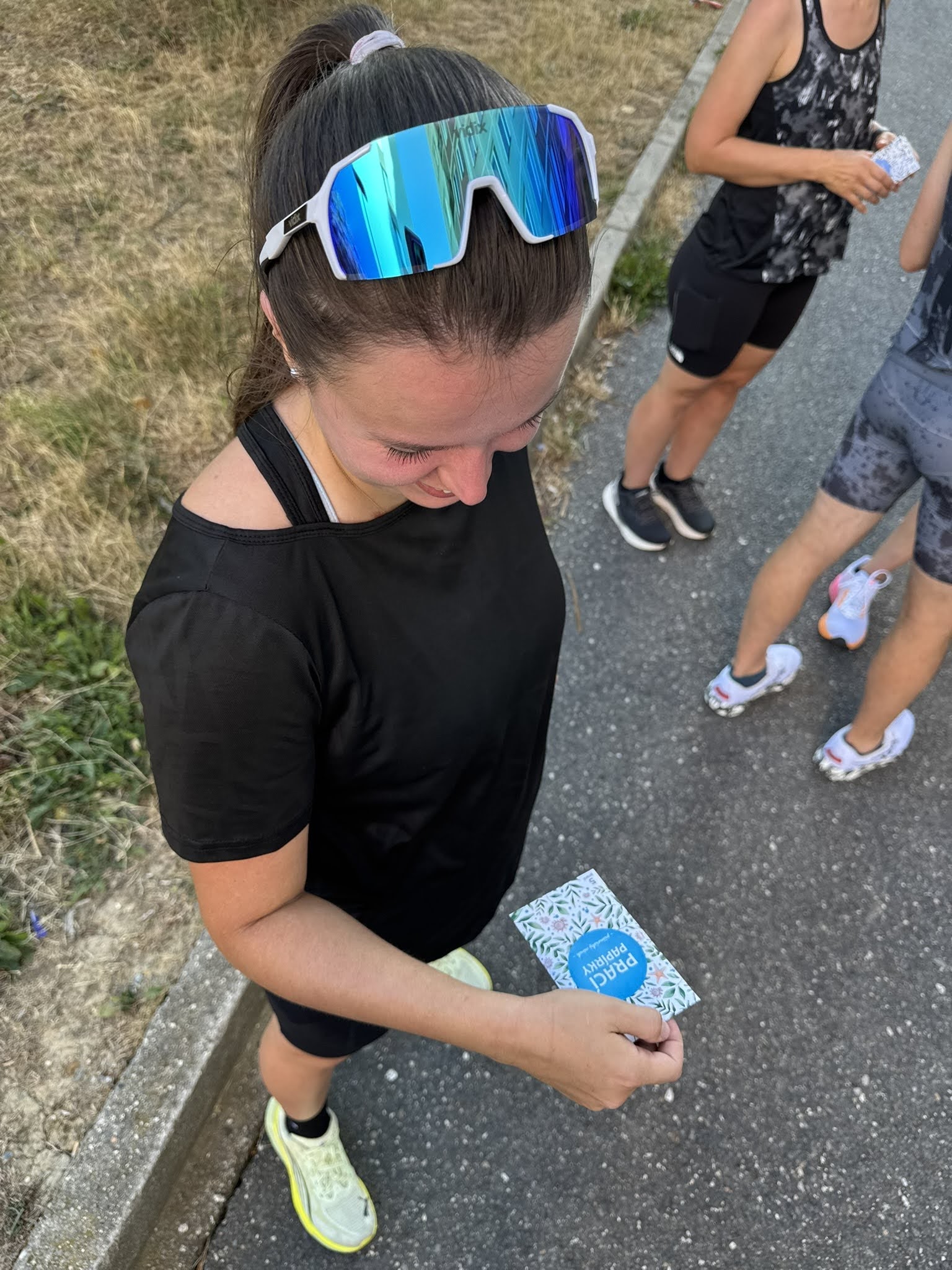
EcoHaus– proud partner of the Orienteering World Cup Czechia in Vyšší Brod
You wear sports clothing not only for racing or the gym, but also for hiking, cycling or everyday walks. Functional fabrics are designed to wick sweat away from the body, dry quickly and keep you comfortable on the move. To preserve these properties for as long as possible, the clothing needs the right care – and washing is precisely where most mistakes happen. Yet a few simple rules are all it takes for your favourite sports pieces to serve you much longer.
Why does sports clothing need different care?
Unlike ordinary cotton clothing, most sportswear is made of synthetic fibres such as polyester, polyamide or elastane. These materials are light, stretchy and able to move moisture away from the skin – but they are also more sensitive to improper care. If detergent or fabric-softener residue starts building up in the fibres, their ability to wick sweat gradually deteriorates. High temperatures and overly aggressive washing likewise shorten the life of elastic fibres.
How to wash sports clothing properly
Proper washing starts the moment you come back from training. Don’t leave sweaty clothing sealed in a sports bag or at the bottom of the laundry basket for days – a damp environment encourages the bacteria that are the most common cause of unpleasant odour. If you cannot wash right away, at least let the clothing air-dry loosely.
Before loading the machine, always check the care label. Close the zips, empty the pockets and turn the garments inside out, so the detergent reaches the places where most sweat and dirt collect, while prints and reflective elements stay protected. Delicate pieces, such as sports bras, are best washed in a protective washing bag.
In most cases it is ideal to wash sports clothing at 30–40 °C – higher temperatures can damage elastic fibres or special fabric finishes. Choose a synthetics or delicates programme with a lower spin speed, and don’t overfill the drum: clothing needs room to move freely so the detergent can reach every fibre.
Which detergent to choose?
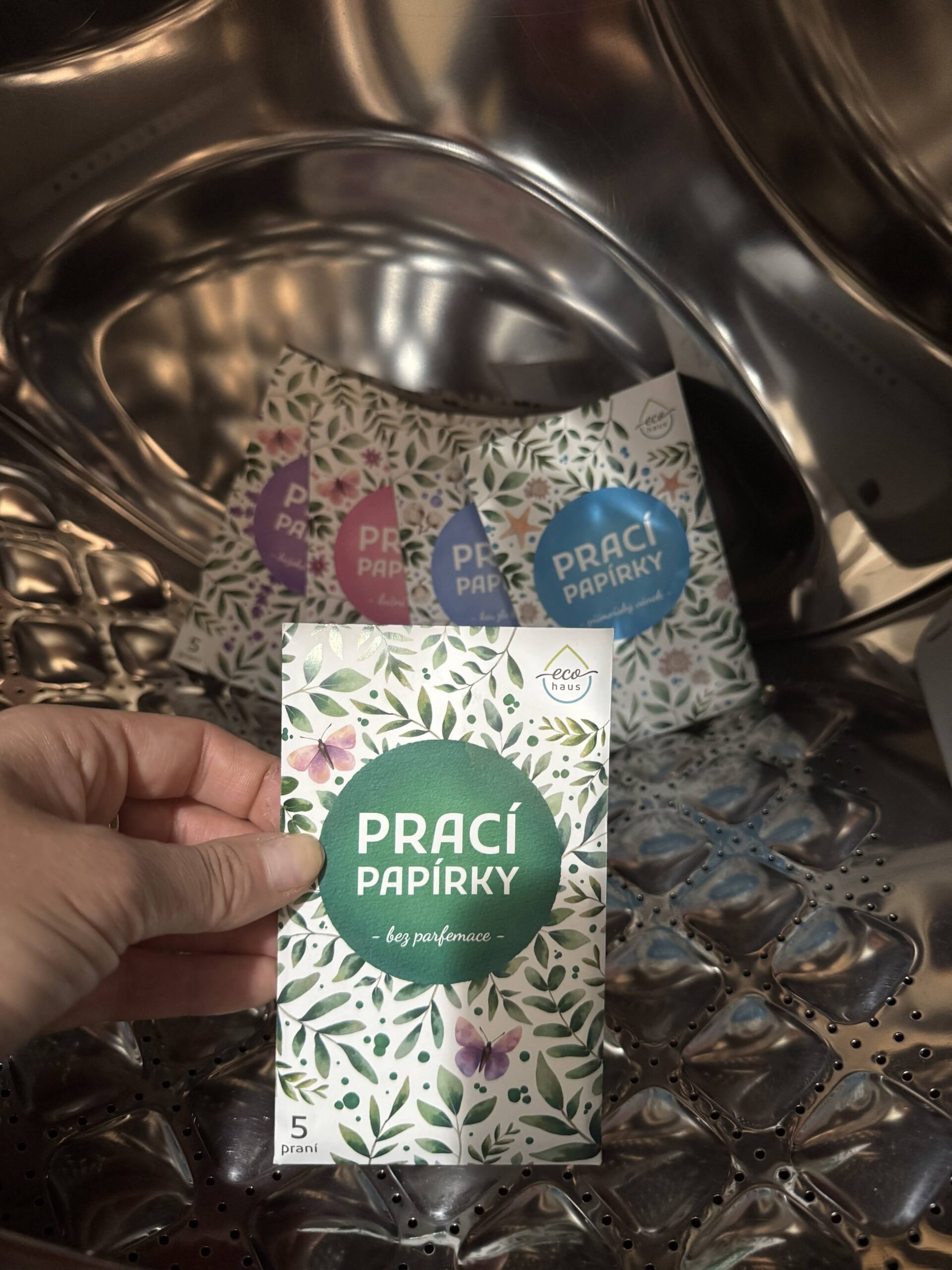
The choice of detergent matters just as much as temperature or programme. Functional materials need neither aggressive chemistry nor large doses – overdosing actually causes residue to build up in the fibres and impair their function. For everyday washing of sportswear, EcoHaus laundry sheets are a great fit: they remove sweat and everyday dirt effectively, dissolve easily, leave no unnecessary residue and are effortless to dose – you always use exactly as much as you need. They also travel well, which competitors staying near the event all week will appreciate.
Does fabric softener belong on sportswear?
One of the most common mistakes is using classic fabric softener. It makes laundry soft and fragrant, but on functional fibres it can form a thin film that gradually limits their ability to wick moisture – the clothing dries more slowly and stops performing as designed. If you love fresh-smelling laundry, you don’t have to give it up: a gentler alternative is the EcoHaus laundry perfume, which adds a pleasant scent without coating the fibres.
How to dry sports clothing
After washing, let sports clothing dry naturally in the air. Thanks to the materials used it dries very quickly, so no tumble dryer is needed – and unless the manufacturer explicitly allows it, avoid the dryer altogether, as high temperatures shorten the life of elastic fibres. Long hours in direct sunlight are not ideal either; a well-ventilated spot works far better.
Proper care pays off
Sports clothing is designed to keep you comfortable in every movement – and with the right care it will keep its breathability, stretch and wicking ability through many more washes. Just stick to a few simple rules:
Wash sports clothing at the recommended temperature.
Use a gentle detergent.
Skip the fabric softener and don’t leave sweaty clothing lying around without air.
With EcoHaus laundry sheets and the rest of the EcoHaus sports laundry range, washing stays simple and gentle on functional materials – so your gear is ready for every training run, and for race day in the forests around Vyšší Brod.
What will this year’s World Cup winners take home?
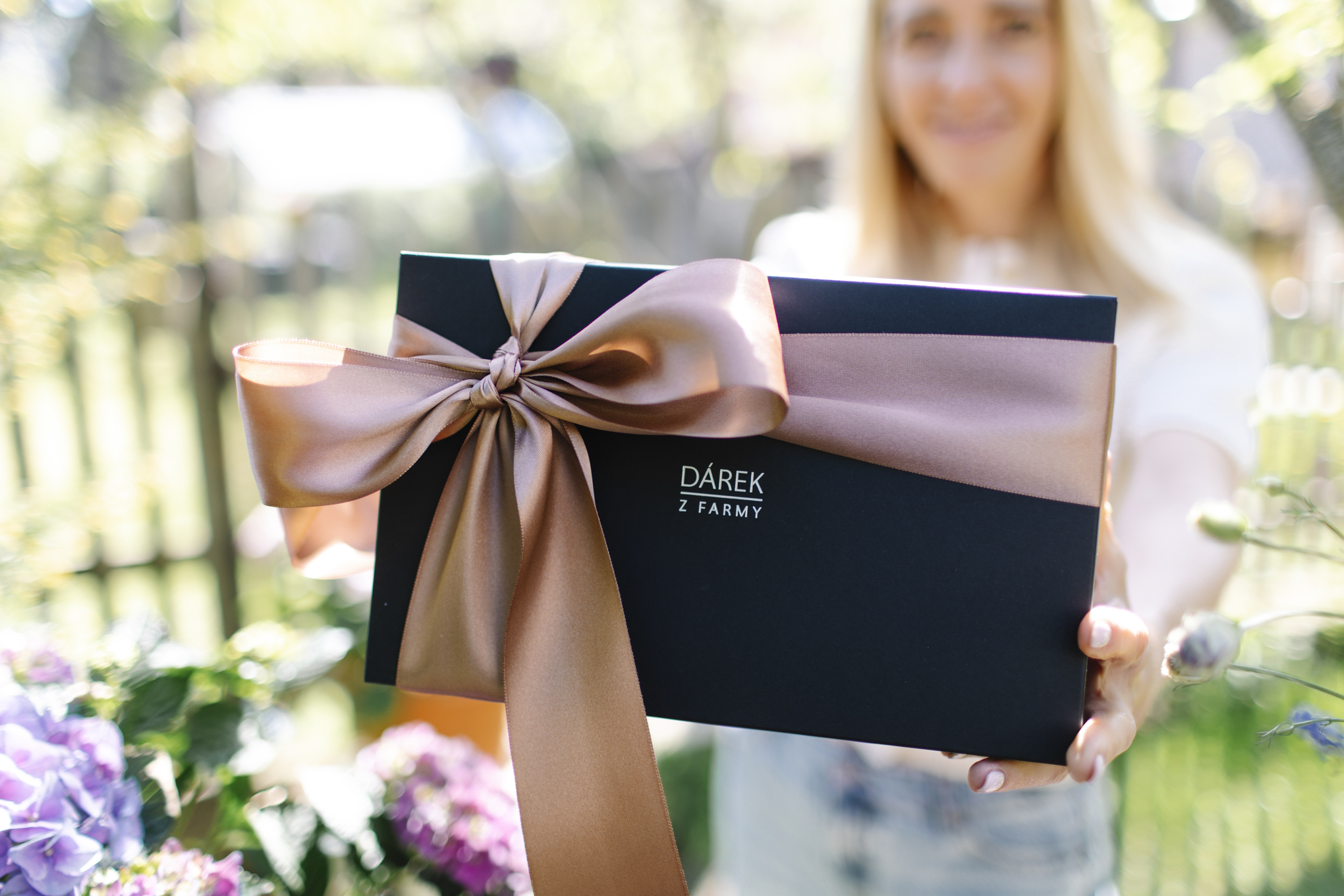
When we sat down with our partner Dárek z Farmy to think about what to put together for the world’s best orienteers, we agreed on one thing – alongside their memories of Czech courses, we wanted them to take home a little taste of the Czech Republic.
Not a tourist souvenir, but honest Czech products from farmers, family producers and sheltered workshops. Products that represent the very best of what is made here.
What’s inside?
With athletes in mind, we chose products they can enjoy without a second thought right after the race, or take home as a fond reminder. That is why the gifts contain no alcohol and no chocolate, which would suffer in the summer heat. Instead we picked products that, to our minds, are a wonderful showcase for Czech gastronomy and honest craftsmanship.
Winners can look forward to grape juice from the THAYA Winery, holder of the title Czech Winery of the Year, or to Czech honey from the Dvořák family in the Křivoklát region, whose beekeeping tradition goes back more than a hundred years. The Křivoklát forests are also a UNESCO biosphere reserve, and it is right here that the bees gather the nectar for this exceptional honey.
The gifts will also include Chráněnky – nuts prepared by people with disabilities at the sheltered workshop in Drahonice. Every package is therefore not only a quality product, but also support for meaningful work for people who would otherwise find employment very hard to come by.
Nor will there be any shortage of jam from the Koldokol family manufactory, where small batches are made from carefully selected fruit.
And because we believe that every race deserves a story of its own, each race day will have a gift of its own as well. The contents will change completely from one day to the next, so even competitors who reach the podium more than once will take home a different combination of products every time – and a new culinary travel experience.
Who put the gifts together?
The gifts were prepared from start to finish by the Czech company Dárek z Farmy, which has long specialised in corporate and event gifts. Its philosophy is a simple one:
When it comes to gifts, they should not only look great but also have a meaning.
That is why the company works above all with Czech farmers, small family producers and sheltered workshops, and why every gift is filled with products backed by real producers and their stories.
It devotes just as much attention to how the gifts look as to what goes inside them. Thanks to carefully considered branding, every gift is tailored to a particular company, brand or event and becomes a natural part of it.
Each year the company puts together tens of thousands of gifts for Czech and international companies, sporting events and major social occasions. Most often they go to business partners and employees as a Christmas thank-you, but increasingly also to conferences, company anniversaries and sporting and cultural events.
A little taste of the Czech Republic
Competitors from many countries around the world are coming to the World Cup. We believe that alongside their memories of Czech courses and the atmosphere of the races, they will also take home a small taste of the Czech Republic – through products created by Czech farmers, family producers and sheltered workshops.
Our thanks go to Dárek z Farmy for becoming a partner of the World Cup and for helping to prepare gifts that will remind the winners not only of their sporting success, but also of the very best of the Czech Republic.